

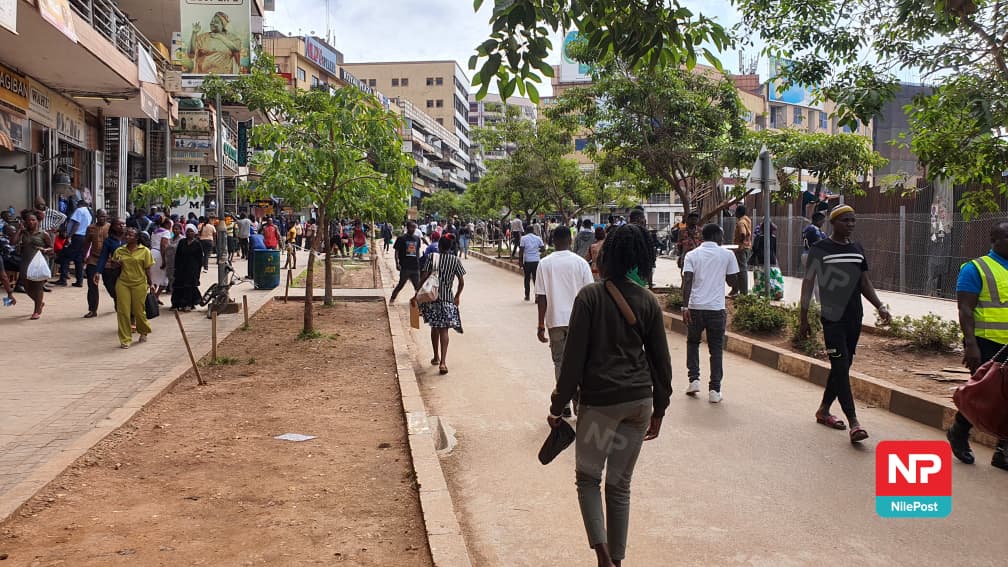
Kampala has embarked on an ambitious journey toward cleanliness and order in urban trade. Through enforcement of vendor relocation beginning in February 2026, the ongoing “Weyonje Sanitation Challenge” launched in November 2025, and the follow-up “Clean and Green Streets” campaign, the city is already witnessing visible improvements.
Pavements are clearer, traffic flows more smoothly, drainage channels are opening up, and public spaces are beginning to look more orderly. Nighttime road washing, mechanical sweeping, garbage-sorting drives, and the installation of new litter bins have all contributed to the transformation.
These initiatives also build on earlier waste-management upgrades, including expanded garbage storage facilities and an enlarged waste-collection fleet.
The results are encouraging. Yet the real challenge is not starting the transformation but sustaining it.
For Kampala’s cleanliness drive to endure, the city must transition from an enforcement-driven approach led by the Kampala Capital City Authority (KCCA) to a model built on shared responsibility between authorities and the people who live and work in the city.
Shop owners, vendors, commuters, market operators, boda boda riders, and office workers all shape the daily reality of Kampala’s streets. Without their active participation, the progress currently visible could easily fade, as has happened in previous cycles where enforcement produced temporary gains that later reversed.
Kampala’s residents cannot continue assuming that someone else will keep the city clean for them. A city becomes clean when its people treat public spaces as an extension of their homes.
Lessons from other cities around the world show that lasting cleanliness rarely comes from enforcement alone. It emerges when governments succeed in transforming sanitation into a shared civic culture.
One of the most instructive examples in Africa is Kigali in Rwanda. Since 2009, Rwanda has institutionalized Umuganda, a nationwide community workday held on the last Saturday of every month from 8am to 11am.
During these hours, businesses close, transport pauses, and citizens aged between 16 or 18 and 65 take part in community work. Residents clear litter, unblock drainage channels, plant trees, repair roads, and maintain public spaces. Leaders, including the president, join ordinary citizens in the exercise.
Participation is not optional; those who fail to take part face fines. The policy has produced remarkable results. Kigali is widely regarded as Africa’s cleanest city. Plastic pollution has fallen dramatically, community bonds have strengthened, and littering has become socially unacceptable. What makes Umuganda effective is not merely enforcement but the sense that cleanliness is a civic duty shared by everyone.
Singapore provides another powerful lesson in how public behaviour can be transformed. The city-state began its modern sanitation transformation with the “Keep Singapore Clean” campaign launched in 1968 under Prime Minister Lee Kuan Yew. The initiative used public education, school competitions, community mobilization, and strict penalties for littering to instil a culture of cleanliness.
Over time, the campaign evolved into the Keep Singapore Clean Movement, coordinated by the Public Hygiene Council and the National Environment Agency. Today it includes neighbourhood champions known as “Clean Hood” volunteers, month-long community litter-picking drives, and resident-led cleaning activities across housing estates.
Singapore’s success stems from a deliberate shift away from a “cleaned city,” where government does all the work, toward a “truly clean city,” where citizens themselves take responsibility for the environment around them.
Japan offers a different but equally instructive model. In Tokyo, cleanliness is not maintained primarily through large national campaigns but through deeply ingrained social habits. Schoolchildren begin learning civic responsibility early. From the age of five, students clean their own classrooms, corridors, and toilets daily, a practice that instils a lifelong sense of responsibility for shared spaces.
Adults also maintain these habits. Public trash bins are relatively scarce in many parts of Tokyo, yet the streets remain spotless because residents typically carry their waste home. Neighbourhood volunteer groups regularly organize community clean-ups, guided by the cultural philosophy of mottainai, which discourages wastefulness. The result is one of the world’s cleanest major cities, achieved through personal responsibility rather than heavy enforcement.
Curitiba in Brazil demonstrates that economic incentives can also drive urban cleanliness, especially in developing contexts. The city’s Green Exchange programme allows low-income residents to exchange sorted recyclable waste for bus tickets, food items, or school supplies. This initiative has been particularly effective in informal settlements where conventional waste collection services are difficult to maintain.
Participation in the programme has reached about 70 percent in some communities. Recycling rates have increased significantly, neighbourhoods have become cleaner, employment opportunities have emerged in recycling and sorting centres, and municipal landfill costs have fallen. Residents benefit directly from their environmental efforts while the city benefits from improved sanitation.
These global experiences suggest several practical strategies that Kampala could adopt to consolidate its current gains.
One option would be to institutionalize a monthly citywide clean-up day similar to Kigali’s Umuganda. Kampala could designate a “Weyonje Community Day,” held once a month on a Saturday morning across the city’s five divisions.
Selected streets could be temporarily closed while residents, vendors, market operators, and office workers participate in collective cleaning activities. Areas recently cleared through vendor relocation could become priority zones for early participation.
The existing Weyonje Sanitation Challenge could also evolve into a network of resident-led neighbourhood teams. Drawing inspiration from Singapore’s Clean Hood model, local volunteers could be trained and equipped with gloves, waste bags, litter pickers, and tree seedlings. These teams would act as local champions, encouraging neighbours and businesses to maintain cleaner surroundings.
Kampala could also explore incentive-based programmes similar to Curitiba’s Green Exchange initiative. Residents who collect and sort recyclable waste could receive transport vouchers, market coupons, or school supplies. Such incentives would be particularly effective in engaging youth, informal workers, and low-income households, turning waste management into both a civic and economic opportunity.
Schools can play a transformative role as well. Introducing weekly school-based cleaning routines similar to those practiced in Japan would help nurture a generation that sees cleanliness not as punishment but as responsibility. Over time, such habits would gradually shift social expectations across the city.
Public accountability mechanisms could further reinforce participation. Digital dashboards or public noticeboards could track indicators such as the number of trees planted by residents, tonnes of waste recycled each month, and drainage channels cleared in each division. Friendly competition between city divisions could be encouraged by recognising neighbourhoods with the best sanitation performance.
The importance of resident participation cannot be overstated. Relying exclusively on KCCA enforcement is costly, difficult to sustain, and often breeds resentment among those being regulated. Behavioural change, on the other hand, produces long-term results.
When residents and workers actively participate in maintaining cleanliness, several benefits emerge. A sense of ownership develops, transforming public spaces into shared community assets rather than neglected government property. Municipal costs decline as community labour supplements formal sanitation services. Public health improves as blocked drainage and unmanaged waste are reduced. Cleaner environments also attract tourists, investors, and businesses, strengthening the city’s economic prospects.
Participation can also reduce social tensions. Vendors, shop owners, and residents who once clashed over space and sanitation can work side by side in maintaining their neighbourhoods. Such interactions build social cohesion and mutual understanding.
Perhaps most importantly, participation creates cultural change. Children who grow up participating in community clean-ups are far more likely to treat cleanliness as a natural social expectation. This is how cities like Tokyo and Kigali maintain high sanitation standards without constant enforcement.
Research from urban development programmes around the world shows that community participation produces multiplier effects. Cleaner streets attract more pedestrian traffic. Increased foot traffic boosts retail activity. Higher business activity generates more tax revenue. Increased revenue enables cities to invest further in infrastructure and services.
Kampala currently has a rare moment of momentum. Vendor relocation has largely been implemented. The Weyonje campaign has already begun reshaping the city’s appearance. Streets are visibly cleaner and greener than they have been in years.
The next step is ensuring that this progress becomes permanent.
By framing cleanliness as a shared civic pride, involving youth and businesses as active partners, and demonstrating the economic benefits of participation, KCCA can shift the narrative from “government enforcement” to “collective achievement.” Structured programmes that reward community involvement, encourage neighbourhood leadership, and embed sanitation into everyday culture will be essential.
Kampala’s residents and workers are not indifferent to the state of their city. Many are already showing willingness to cooperate with the current reforms. What they need now are clear opportunities to participate, practical tools to support their efforts, and visible recognition that their contributions matter.
If these elements are put in place, the transformation currently underway in Kampala will not remain a temporary improvement. It will become a permanent feature of the city’s identity.
These are changes that Kampala can achieve—and sustain—together.
